
The evidence is unusually strong. In a 2018 study of 122,007 adults who underwent treadmill testing at the Cleveland Clinic and were followed for a median of 8.4 years, cardiorespiratory fitness was the clearest predictor of survival in the dataset. The least fit group had roughly five times the adjusted mortality risk of the most fit, and the benefit did not level off at any point: every step up in fitness was associated with fewer deaths (Mandsager et al., JAMA Network Open, 2018). This is an association, not proof of causation. But it is one of the most consistent findings in modern preventive medicine, and unlike most risk factors, this one is directly trainable.
Most annual check-ups in the Philippines do not include it. This article covers what VO2 max is, what the research shows, and how it is measured properly.
What VO2 max actually measures
Muscles need oxygen to produce energy. The heart, lungs, and blood vessels exist to deliver it. VO2 max measures the entire chain: how much oxygen the body can take in, transport, and use at maximum effort. It is expressed as milliliters of oxygen per kilogram of body weight per minute, and it is considered the single best measure of cardiovascular fitness.
It behaves like a capacity. A high VO2 max means a large engine. A low one means the body struggles to sustain effort, whether that is climbing stairs, playing with children, or recovering from illness. It also declines with age, roughly 10% per decade after the early 30s in untrained people. Without training, the loss compounds. With training, much of it is preventable.
What the research shows
The Cleveland Clinic study divided over 122,000 patients into five fitness groups based on age- and sex-matched treadmill performance. Over 1.1 million person-years of observation, death rates fell at every level of fitness, and the steepest part of the curve sat at the bottom. The gap between the least fit and the merely below average was the largest single gap in the study. Reaching an elite level was not required for most of the benefit.
Two findings deserve emphasis. First, there was no observed upper limit: even the fittest subgroup had lower risk than the group just below it. Second, the benefit held in older adults and in people with high blood pressure. Fitness remained a predictor of survival at ages where most other interventions show diminishing returns. The study's own conclusion is direct: cardiorespiratory fitness is a modifiable indicator of long-term mortality.
A fair caveat: fitter people often smoke less, sleep better, and eat better, and part of the association reflects those habits. Researchers adjust for what they can. What survives the adjustment is still the strongest single predictor available in a clinical setting.
Why smartwatch numbers cannot be relied on
Modern watches estimate VO2 max from pace, heart rate, and motion during outdoor walks or runs. For some users the estimate is close. For others it is off by 10 to 20%, particularly in humid climates, on treadmills, in people who walk rather than run, and in anyone whose heart rate response is unusual. Cardiologists who work with both describe the pattern plainly: sometimes the wearable matches the lab, and sometimes it does not.
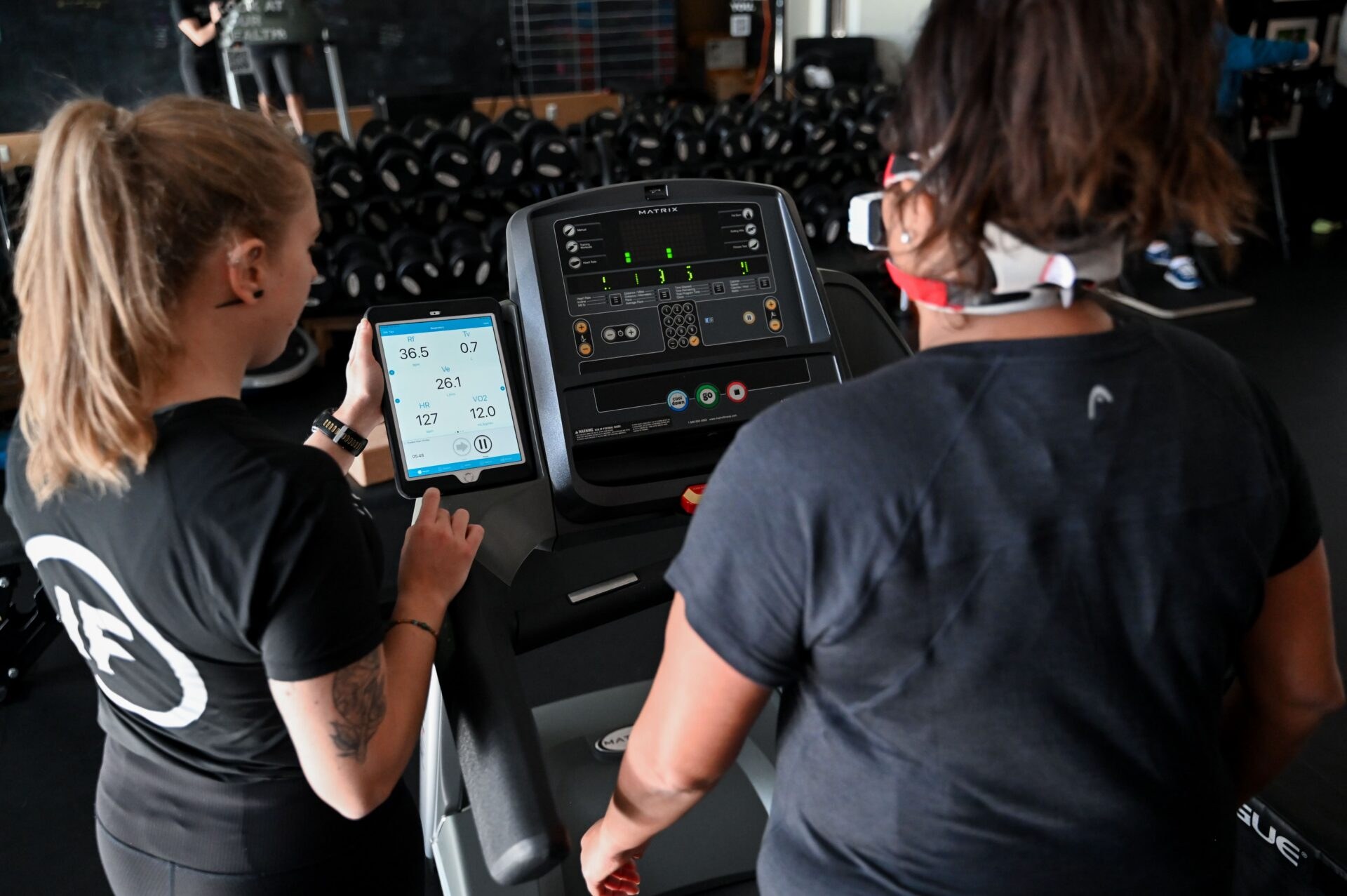
The alternative is measuring real gas exchange directly. Portable metabolic analyzers such as the VO2 Master do what a smartwatch cannot: they measure the air actually breathed in and out during exercise, producing a true VO2 value rather than an algorithmic guess. The mask is lightweight and comfortable, and most people stop noticing it within the first few minutes. Testing is done with a professional, who sets the right protocol for the individual, manages the pace, and makes sure the effort is both safe and maximal.
Can it be improved?
Yes, and this is what separates VO2 max from most longevity biomarkers: it responds to training at any age. The established approach combines a base of easy aerobic work, around 150 minutes per week at a conversational pace, with one or two harder sessions, such as interval training of the Norwegian 4x4 type. In studies of previously sedentary adults, meaningful improvement appears within three to six months.
Two practical points. The easy sessions do most of the work, which makes this accessible to people who dislike intense exercise. And the watch cannot confirm whether training is working. Only a measured retest can.
When the basics are not enough
Exercise advice is freely available. What is missing for most people is a baseline. Training without a measured VO2 max means choosing intensities by feel and hoping the plan works. A measured number changes that.
VO2 max testing
The test takes place on a treadmill or stationary bike while wearing a mask connected to a gas analyzer. The intensity rises gradually until maximum sustainable effort is reached. The full protocol takes roughly 10 to 20 minutes, including warm-up. The result is an exact VO2 max value and the heart-rate zones that correspond to it.
This matters because the number converts exercise from a habit into a plan. Training zones based on a real measurement let each session do what it is supposed to do. The baseline also turns progress into something verifiable: retesting after a training block shows whether the work produced a change, something no wearable reliably confirms.
Where to get tested in the Philippines
VO2 max testing is available in the Philippines through Coral Longevity Clinic, a Metro Manila-based longevity clinic. The clinic offers a free online consultation to determine whether testing is relevant for a given person, based on their health history and goals. You can book a consultation here.